
A.I. Design Sprint
Designing Future A.I. Workflows
There is a better way to integrate A.I. and automation—one that replaces weeks of tedious, high-friction discovery workshops with an efficient, self-serve blueprint process. Instead of sinking billable hours into manual scoping and requirement-gathering, AI-guided design thinking enables clients to run internal sprints on their own schedule.
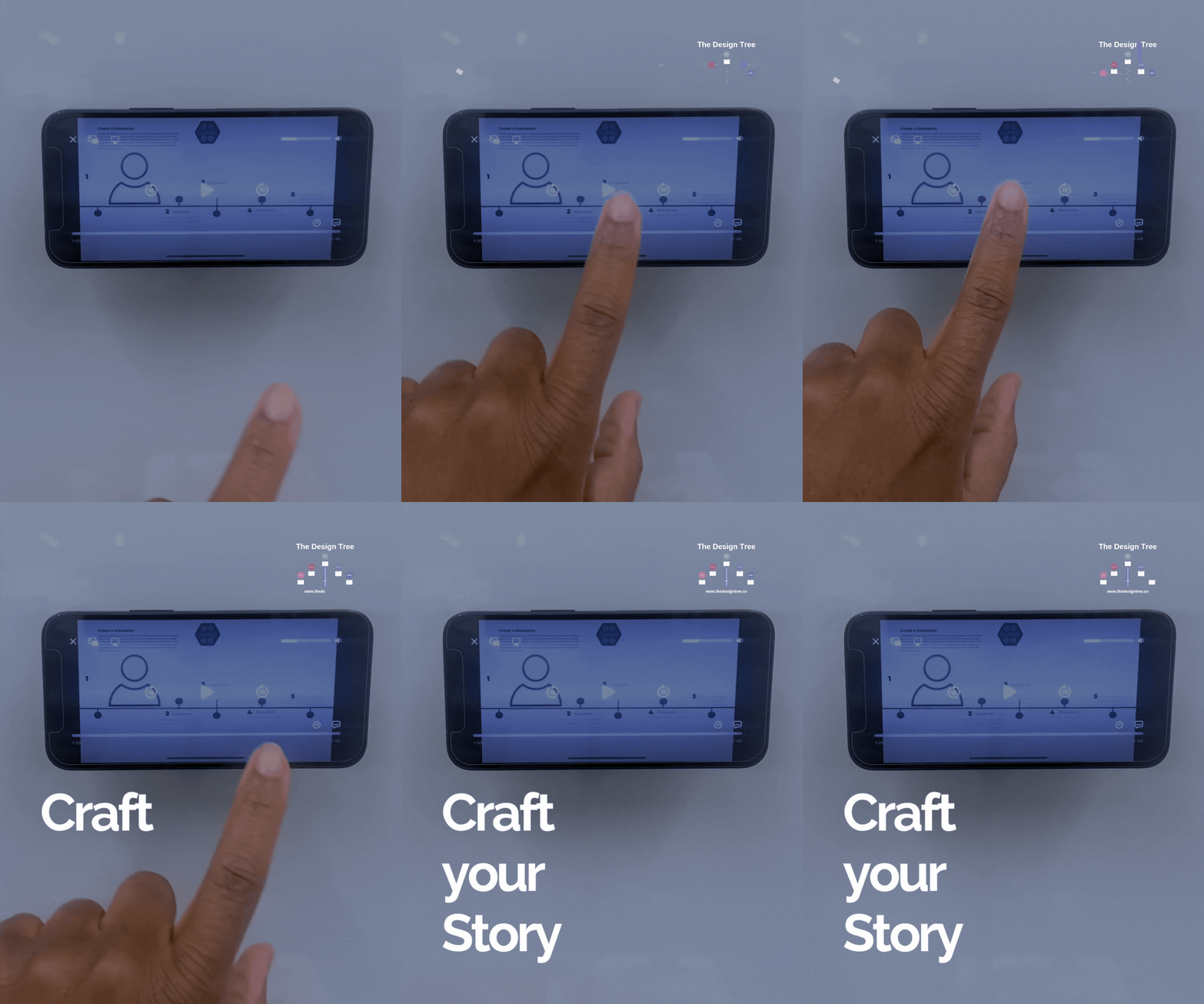
Craft your Story
How do we grasp a job’s core? Start with an Employee Story — the sprint’s focus and empathy trigger to solve employees’ hardest problems.
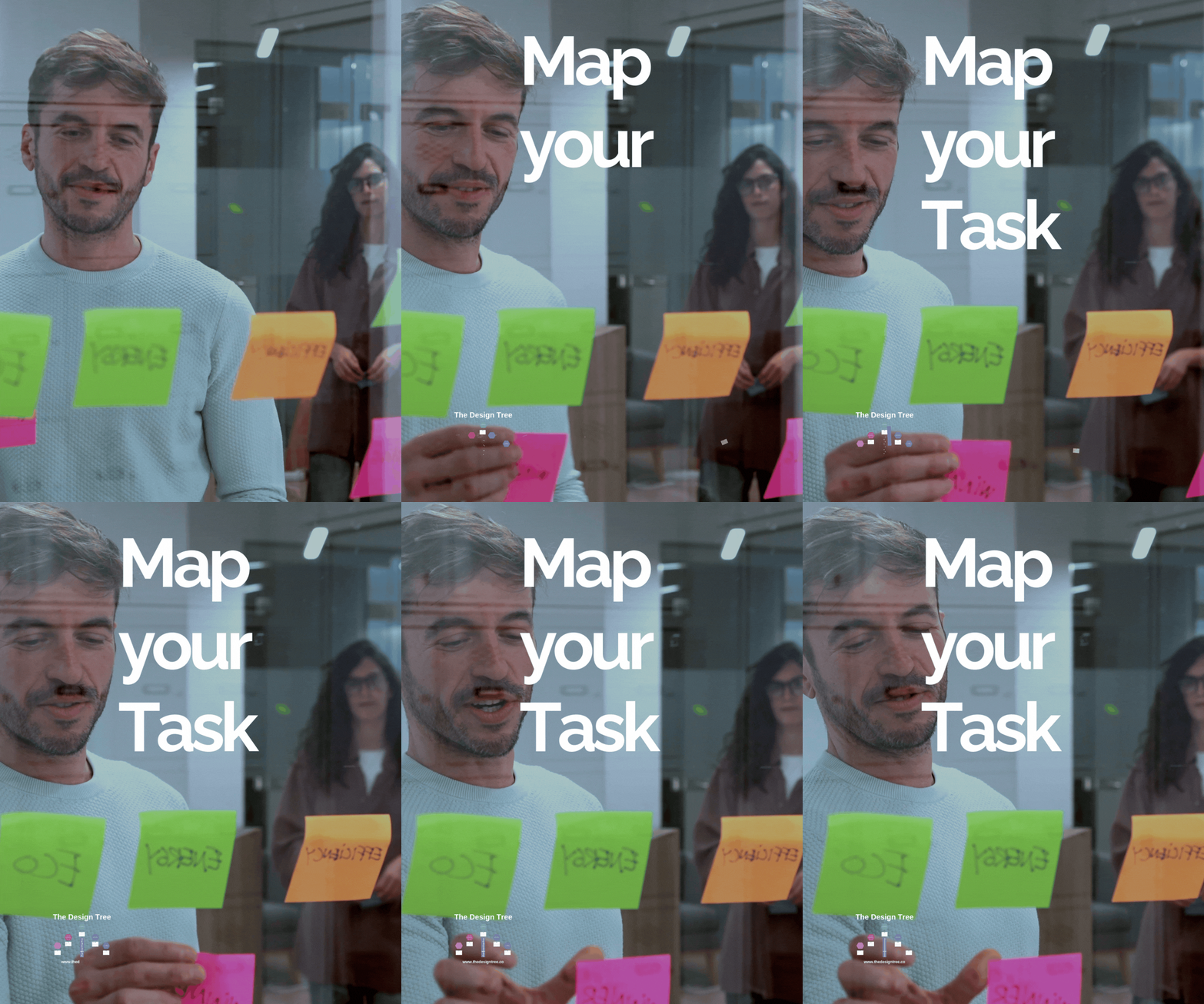
Map your Task
We must define which tasks robots/AI can do—repetitive, tedious, low-value—and which require human touch—high-value, interactive tasks.

Design your Workflow
The session aims to design an AI-augmented workflow that splits labor: humans handle high-value tasks (complex human interactions with clients/customers/patients) while AI handles low-value, repetitive tasks.
Designing the Future of Work with an A.I.-Augmented Design Workflows
At The Design Tree, we use AI to design A.I.-augmented workflows that transform complex enterprise needs into execution-ready solutions. By replacing traditional, weeks-long discovery cycles with intelligent, client-led design thinking, our platform instantly maps out complete operational blueprints—from granular tasks and management frameworks to clear KPIs and SOPs. We take the guesswork out of system integration, empowering your business to skip the friction of manual scoping and jump directly into high-impact, scalable automation.
Design A.I. Workflows with A.I.

-
How can we truly understand the heart of a job? To truly understand the heart of a job, we can start with an Employee Story.
Our employee story — will be the focus of our sprint—the story we will use to trigger the empathy necessary to solve our employees' problems, the challenging aspects of their job. Our employee story will be used to develop a workflow that automates the challenges or the low-value aspects of their job allowing A.I. to free them from the monotonous, robotic, low value work.
In our employee story we will share a detailed, vivid story about a challenging day. This isn't just a list of tasks; it’s about the emotional journey and its challenges. Challenges we hope to automate away.
-
The goal of this future workflow is employee joy. We want to clearly delineate what aspects of the job robots or A.I can perform, the repetitive, tedious, monotonous and boring task or the low value task and we want to clearly identify the taks that require a human touch or the high value task the human interactions. To accomplish lets first map out all task. Then identify high and low value task and tools they require.
Finally, we can map out key performance indicators necessary to evaluate the future work and the managerial tools needed for the employee to excel."
-
The goal of this brainstorming session is to define a future A.I. Augmented workflow by designing a clear division of labor: the human employee focuses exclusively on high-value tasks, such as complex human interactions with clients, customers, or patients, while the A.I. agent (acting as a "secretary") takes over all low-value, repetitive tasks, including transcription, documentation, follow-up, and data entry. Using the previously created Task Map, the team must review each task and ask, "How can the AI do this repetitive task, and what human action can trigger the A.I. to begin accomplishing this task on our behalf?" to creatively sequence and automate the workflow.
-
How can we Align our A.I Augmented Workflows with our manager? Connecting the employee's workflow with the manager’s oversight is a critical step in our workflow. This alignment will help us map out exactly where the employee’s AI-powered workflow generates data that the manager needs to review, in order to help coach, or approve product delievery. In addition this part of the workflow provides the opportunity to review the managers Standard Operating Procedures (SOPs) and management tools to fit this new AI-speed. It ensures that as the employee becomes faster, the manager is ready to support that increased capacity without becoming a bottleneck.
-
How can we collect and analyze the feedback about our design sprint workflow? To collect and analyze feedback, we can use a Feedback Capture Grid. A Feedback Capture Grid will help us collect and anlayze the feedback of our workflow and help us further develop ideas or features that will help us improve upon our current workflow design. It helps the employee-identify what works well, what needs to be improved, what questions they have about the workflow or AI's behavior, and what new ideas emerge after seeing the future workflow.