
Align workflows with management, identify intersection points where the AI's and human tasks end and management begins, define management tools, the new KPI’s and SOPs for high-level coaching and strategy.
Step 4. Aligning Workflows
Click here to Start …………. Align your Workflow
Instructions
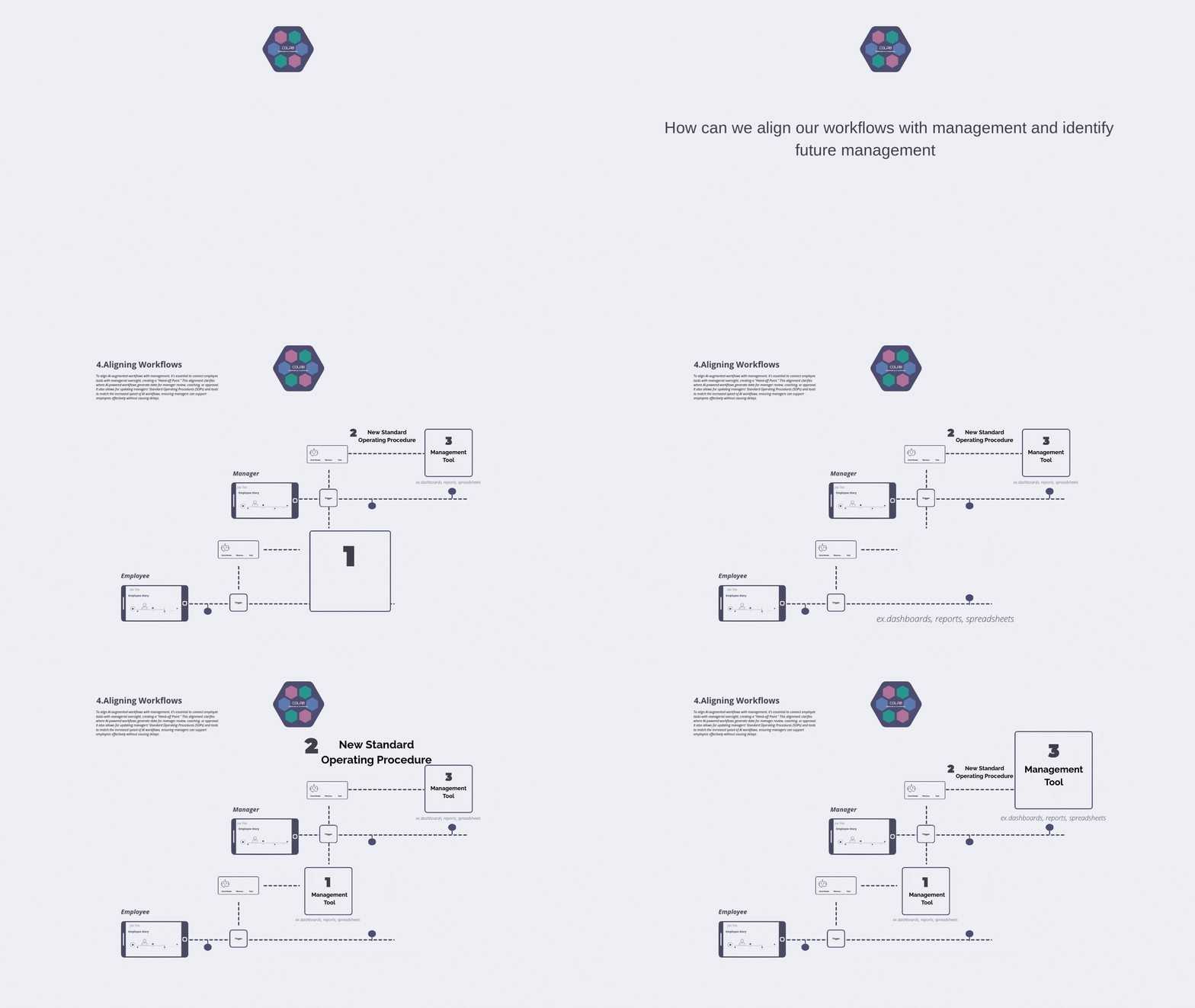
Step 1. Identify the 'Intersection Point.' This is exactly where the employee's AI-driven and human task finishes and the manager needs to step in. Brainstorm Management Tools—like dashboards, reports, that will track the AI’s output. This management tool helps to keep the employee on track managing the work performed by the A.I.
Step 2. Align the expectations. If the AI speeds up the employee, how does the manager’s role shift to focus more on coaching and high-level strategy?
From here, we document the new 'Managerial SOP.' This ensures that the A.I. doesn't just create a vacuum, but creates a bridge. When the tools are aligned, the manager starts their work exactly where the robotic task ends, allowing everyone to focus on the human personal touch."
Step 3. Finally, lets explore the managers Management tools. This tool will include and analysis of all the work from the employees the manager is responsible for and the new standard operating procedure.
Aligning Workflows
Group Size: 4-5
Duration: 30-60 mins
Materials Needed: Print Aligning Workflows, Pens, Markers and Post-its
Map Task png
Map Task pdf
Details:
To align AI-augmented workflows with management, it's essential to connect employee tasks with managerial oversight, creating a "Hand-off Point." This alignment clarifies where AI-powered workflows generate data for manager review, coaching, or approval. It also allows for updating managers' Standard Operating Procedures (SOPs) and tools to match the increased speed of AI workflows, ensuring managers can support employees effectively without causing delays.
Aligning Workflows
To successfully integrate AI-augmented workflows with management processes, a clear "Hand-off Point" must be established. This point links employee tasks to managerial oversight, explicitly defining where AI-generated data requires a manager's review, coaching, or final approval. Furthermore, it is crucial to update managers' Standard Operating Procedures (SOPs) and tools. This is necessary to align with the accelerated pace of AI workflows, thereby guaranteeing that managers can effectively support employees without inadvertently becoming a bottleneck.
-
Sales Manager: A sales manager uses an AI-generated call summary dashboard to quickly identify coaching opportunities for negotiation tactics, rather than sifting through individual notes.
Design Team Lead: A design team lead reviews an AI-curated portfolio of draft concepts to approve the overall direction, allowing them to focus coaching on creative vision instead of file organization.
Software Development Manager: A development manager checks a real-time AI report on code quality and bug frequency to strategically allocate resources, freeing them to mentor engineers on complex problem-solving.
Healthcare Administrator: A clinic manager uses an automated patient flow tracker to pinpoint bottlenecks, enabling them to coach staff on improving patient communication and empathy.
Marketing Director: A marketing director uses an AI-driven campaign performance dashboard to provide instant, high-level feedback on strategy, shifting their focus from data verification to long-term market positioning.
-
Work in small 4-5 team member groups. Collaborate to align workflow with management.
-
Step 1. Identify the 'Intersection Point.' This is exactly where the employee's AI-driven and human task finishes and the manager needs to step in. Brainstorm Management Tools—like dashboards, reports, that will track the AI’s output. This management tool helps to keep the employee on track managing the work performed by the A.I.
Step 2. Align the expectations. If the AI speeds up the employee, how does the manager’s role shift to focus more on coaching and high-level strategy?
From here, we document the new 'Managerial SOP.' This ensures that the A.I. doesn't just create a vacuum, but creates a bridge. When the tools are aligned, the manager starts their work exactly where the robotic task ends, allowing everyone to focus on the human personal touch."
Step 3. Finally, lets explore the managers Management tools. This tool will include and analysis of all the work from the employees the manager is responsible for and the new standard operating procedure.
-
Identify the Intersection Point: Clearly define where the employee's AI-driven task ends and the manager's oversight needs to begin.
Align Management Tools: Brainstorm and implement dashboards or reports that track and utilize the AI's output for management review.
Redefine the Manager's Role: Shift the manager's focus from task-level correction to higher-level coaching and strategic planning.
Document New Managerial SOPs: Update the manager's Standard Operating Procedures to integrate the new AI-speed workflow effectively.
Confirm the Hand-off: Ensure the manager's work starts precisely at the moment the AI's "robotic" task is complete to prevent bottlenecks.
Adjust Manager's KPIs: Modify Key Performance Indicators to reflect the manager's new ability to lead and coach more effectively.
Focus on the Human Shift: Deliberately create time for managers to focus on human elements like empathy and complex problem-solving.
Leverage Real-time Data: Use AI-generated data tools for instant insights, allowing for quicker strategic advice and intervention.
Link Employee Output to Oversight: Explicitly connect the data generated by the employee's AI-powered workflow to the manager's required review.
Prevent Micromanagement: Implement tools and procedures that allow managers to oversee without getting bogged down in individual, minor details.