
Brainstorm workflows by delegating low-value, repetitive tasks to AI, leaving high-value human interactions to the employee. Next, define the sequence of tasks, identifying A.I. triggers and management tools.
Step 3. Designing Workflows
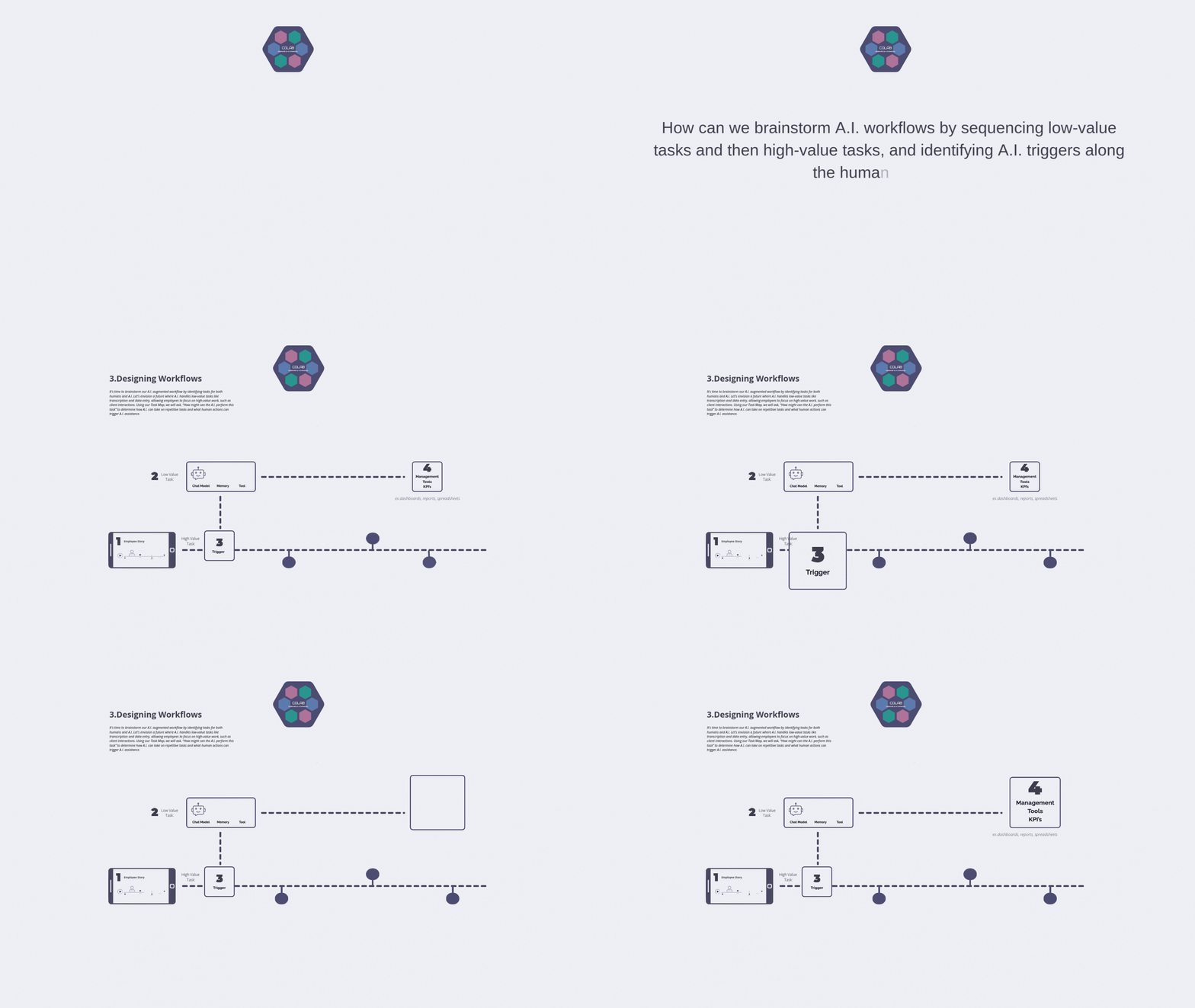
Click here to Start …………. Design your Workflow
Instructions
Step 1. Let’s categorize all the high value task the humans will perform in the workflow.
Step 2. Next, let’s categorize all the low-value task we want A.I. to perform in the low-value workflow.
Step 3. Collaborate to creatively sequence the workflow and think of human task that can trigger the A.I. to accomplish a series of repetitive robotic tasks or the low value task with minimum input from the Human.
Step 4. Collaborate to design Management tools that include KPI’s to manage the human and AI workflows.
Designing Workflows
Group Size: 4-5
Duration: 30-60 mins
Materials Needed: Print Map Task, Pens, Markers and Post-its
Map Task png
Map Task pdf
Details:
The goal of this brainstorming session is to define a future A.I. Augmented workflow by designing a clear division of labor: the human employee focuses exclusively on high-value tasks, such as complex human interactions with clients, customers, or patients, while the A.I. agent (acting as a "secretary") takes over all low-value, repetitive tasks, including transcription, documentation, follow-up, and data entry. Using the previously created Task Map, the team must review each task and ask, "How can the AI do this repetitive task, and what human action can trigger the A.I. to begin accomplishing this task on our behalf?" to creatively sequence and automate the workflow.
Designing Workflows
The core philosophy is to elevate the human role by offloading repetitive, mechanical work to A.I.
The Human Employee: The High-Value Specialist will focus on tasks requiring emotional intelligence, complex reasoning, relationship building, and ethical judgment (e.g., client interactions, strategic decisions, creative problem-solving).
The A.I. Agent: The Efficiency Secretary will handle all low-value, repetitive tasks to ensure speed and consistency. Responsibilities include transcription, documentation (reports, summaries), follow-up communication, and data entry into enterprise systems.
-
Elevate Human Role: The primary use case is to shift human focus from repetitive, low-value work to high-value tasks requiring complex reasoning and emotional intelligence.
Automate Low-Value Tasks: The AI acts as an "Efficiency Secretary" to autonomously handle all transcription, documentation, follow-up, and data entry, ensuring speed and consistency.
Define Division of Labor: The process systematically defines a clear separation where the human is the high-value specialist and the AI is the efficiency secretary.
Create AI Triggers: The workflow design specifies precise, non-disruptive human actions that reliably initiate a series of automated AI tasks.
Design a Future-State Workflow: The overall goal is to produce a creatively sequenced and automated operational standard that maximizes efficiency by integrating AI into the work process.
-
CollWork in small 4-5 team member groups. Collaborate to design workflow brainstorming human workflow, and A.I. workflow.
-
Step 1. Let’s categorize all the high value task the humans will perform in the workflow.
Step 2. Next, let’s categorize all the low-value task we want A.I. to perform in the low-value workflow.
Step 3. Collaborate to creatively sequence the workflow and think of human task that can trigger the A.I. to accomplish a series of repetitive robotic tasks or the low value task with minimum input from the Human.
Step 4. Collaborate to design Management tools that include KPI’s to manage the human and AI workflows.
-
Focus human employees on high-value tasks requiring emotional intelligence and complex judgment.
Delegate all low-value, repetitive tasks like transcription and data entry to the A.I. agent.
Systematically review current tasks and determine if the A.I. can perform them autonomously.
Design precise human actions that will serve as non-disruptive triggers for the A.I. to begin a task.
Creatively sequence the new workflow to maximize automation and minimize human friction.
Develop Key Performance Indicators (KPIs) to effectively manage both the human and A.I. workflows.