Market Design
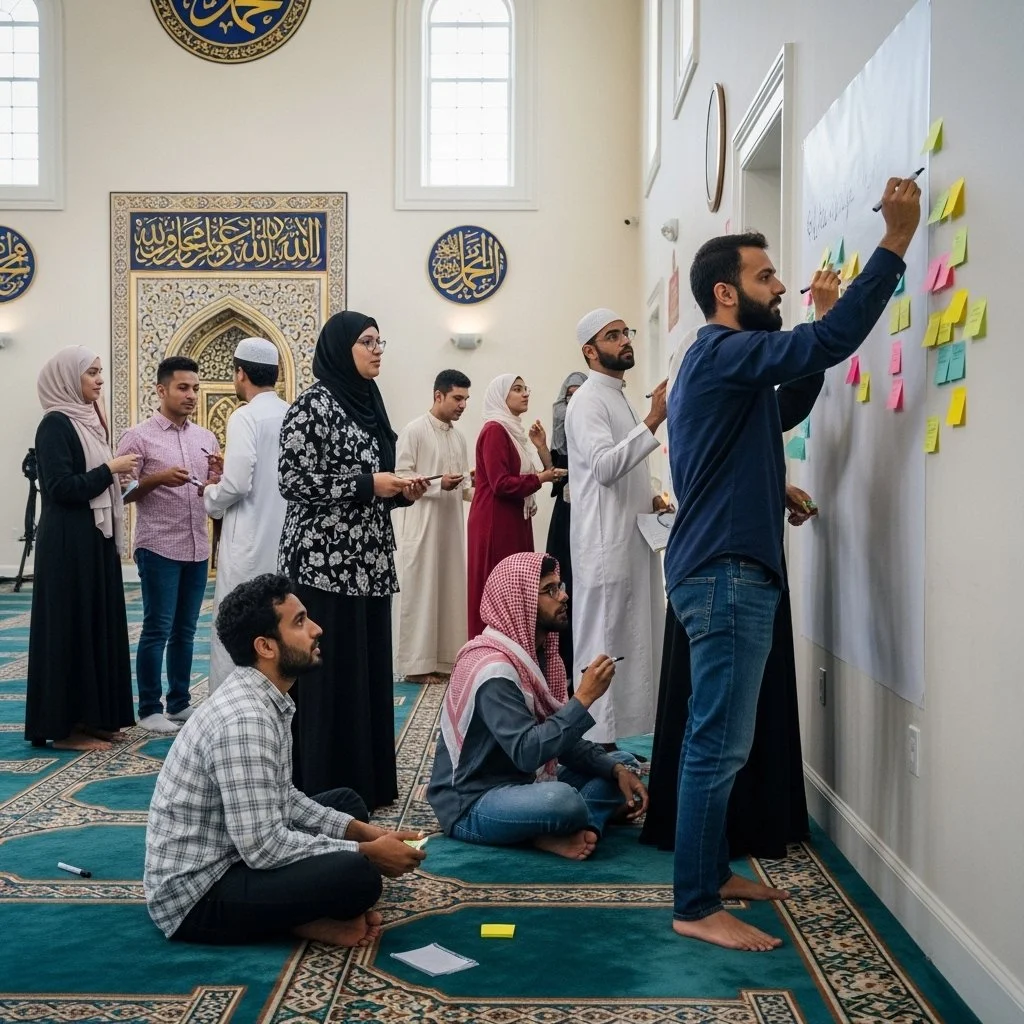
For over 1,000 years, the Ummah understood a fundamental truth: the dynamic relationship between the Masjid and the Market.
When the Prophet Muhammad (s.a.w) arrived in Medina, he didn't just build a place of worship; he established a Market. He knew that Markets are the building blocks of future economies and gateways to cultural expression.
Today, the global Muslim Market is projected at $8.3 trillion. The question is: Will our Masjids be smart enough to capture the Market that is technically already theirs?
What is Market Design?
We are a platform dedicated to Market Design. We use modern tools and collaborative design thinking to empower communities from the ground up. We call this the Medina Model, powered by 21st-century innovation.
At The Design Tree
Market Design: Strategy sessions that allow us to co-create future Markets designed to accelerate our businesses.
Business Architecture: Designing businesses within a market, we design for long-term business growth and development.
A.I.-Enhanced Workflows: Integrating custom artificial intelligence systems to automate the mundane and supercharge the creative.
Market Grow into Economies
Markets are wealth engines. Market grow due to production, innovation, and population growth. It is Market efficiency that is the real power behind Market Design. Efficiency in production and consumption is what creates wealth for the community. When Market Design is well thought out, it reduces the cost to start a business and the cost to obtain and sell to customers. This efficiency is created through culturally relevant experiences that the community designs. Again, the goal of Market design is to create pleasurable experiences in the market, limiting as much friction as possible and accelerating the businesses through efficiency found within the Market. This is how Market Design creates wealth in communities.
Designing a Market Prototype.
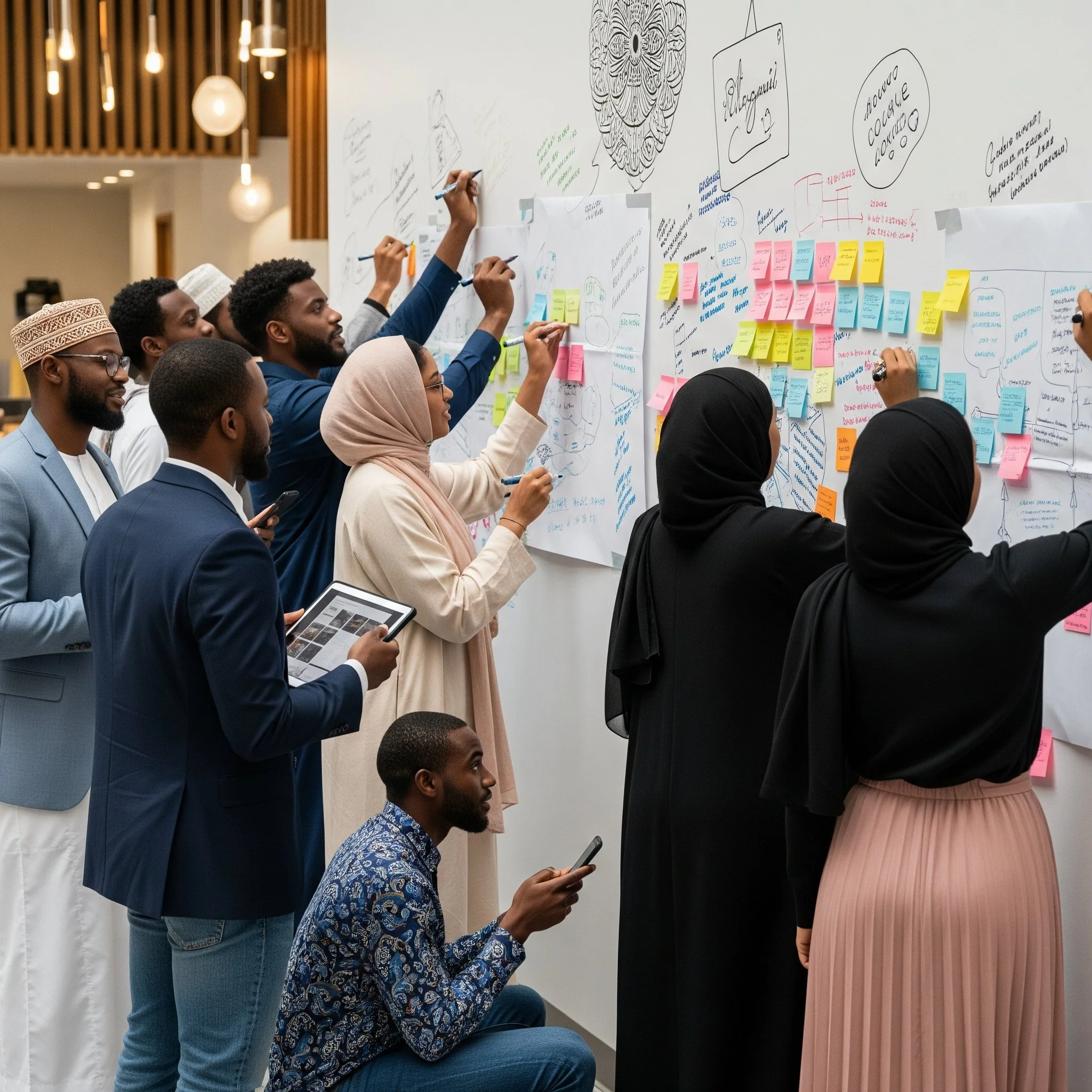
In Market Design, we design market prototypes by collaborating with our local business community to design joint customer experiences. This simple collaboration strategy provides a blueprint for a Market Prototype. With this blueprint, we can continue to design to improve the cycle of production, consumption, and distribution. This collaboration can happen online or offline in Design Labs before any market is made live, allowing the community to improve the design, creating market efficiency.
To make this process simple, we created The Design Tree, which organizes your business community all in one place and walks each business through a step-by-step process. The Design Tree makes use of whiteboard technology and the interplay of customer storytelling to design a Market Prototype. This strategy gives the entire community a visual of their collective market, allowing the group to brainstorm ways to design and refine their market. In addition, this strategy allows for the community to collaborate to help design and refine each individual business within the market.
When we think of this type of collaboration, we immediately think of a local Market/Bazaar in a central place where the community's goods and services are purchased. Although this is Market Design, we should also have a larger perspective. When we say markets, we should think of the Stock Market/Wall Street. This is not just one local place, but it may be a collection of places or a collection of places online.
Markets a Divine Calling.
Finally, we know the story of how the Prophet Muhammad established a Market for his new and economically struggling community in Medina. Due to the Prophet (s.a.w) example, the Masjid and Market became the model for Islamic Urban Development for 1,000 years before the advent of colonialism.
In addition, the Prophets’ stories show how each one sets the groundwork for believers to succeed in business, markets, and trade. For example, King Sulayman’s (s.a.w) and the Prophet Muhammad's (s.a.w) religious empires heavily relied on business, markets, and trade as their source of power, and surprisingly, both utilized the same ancient trade routes created thousands of years prior, when Hajjar (s.a.w) founded Mecca, when the well of Zamzam was discovered. When we look closely, we see clearly that within the background of each of the Prophet’s stories, the foundation was being laid for future believers to engage the world in businesses, markets, and trade.
It is through business, markets, and trade that we can impact the world. Charity and non-profit programming are beautiful, but charity can not change the world. All problems have their economic roots because health itself falls on a social gradient. It is incumbent upon the Muslim to establish Markets in the world that create economic opportunity and social mobility to prevent the proliferation of social problems and disease. More importantly, business, market, and trade empower the community to sustain the Masjid, establish Waqf’s, and provide Zakat.
To get started in Market Design, book an appointment for a free strategy session.
As-Salaam Alaykum
Thank you
Yahya John